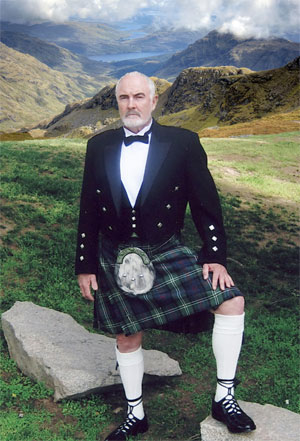

Unfortunately (but not surprisingly), The NALT Christians Project has come under fire from a variety of sides: atheists suspect we’re trying to convert them, fundamentalists think we’re wolves’ in sheep’s clothing trying to legitimize sin and sundry others declare that we’re continuing white male oppression by speaking at them rather than giving them a voice. It’s tempting to try and rebut all these claims, but instead I’m going to focus on one particular critique that was voiced on Twitter:
When you say “we’re not ALL like that”, this is a subtle (if unintentional) use of the No True Scotsman fallacy
The No True Scotsman fallacy is an informal logical fallacy that entails a shift of associations to arbitrarily exclude an individual from the group being discussed. For example, in the case of Christians and LGBT rights you’d be committing this fallacy if you made this argument:
A: All Christians are opposed to LGBT rights.
B: But Bob is a Christian and supports LGBT rights.
A: Well, that just means that Bob isn’t a true Christian.
The No True Scotsman argument insulates you from having to deal with defeaters to your claim by simply dismissing them as not being “true” members of the group. But that’s not even close to what NALT is doing. By calling ourselves “Not All Like That” we are not declaring that anyone is or isn’t a true Christian. We’re not shifting people in or out of any groups and we’re not ignoring potential defeaters to our position.
Our name does implicitly combat another far more pervasive logical fallacy: the Hasty Generalization. This fallacy involves drawing a conclusion about the members of a group based on insufficient information. It goes like this:
1. Focus on the Family, AFA and FRC are opposed to LGBT rights.
2. Focus on the Family, AFA and FRC are Christian organizations.
3. Therefore all Christians are opposed to LGBT rights.
That’s the sort of reasoning that NALT is out to overturn. But the tricky thing with fallacies is that even though the reasoning may be flawed, the conclusion could still be true. It doesn’t logically follow from 1. and 2. that all Christians are opposed to LGBT rights, but it’s still possible that all Christians might be of such a mindset.
So how do you know for sure that not all Christians are opposed to full LGBT equality? It’s easy: just take a few minutes, or even a few hours, and listen to what Christians themselves have to say.

Leave a Reply