Category: Theology

  • Review: The Revisionaries

    Review: The Revisionaries

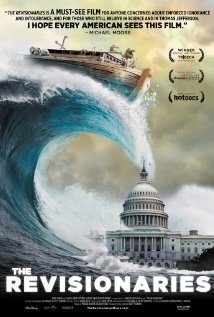
    The Revisionaries

    The Revisionaries is a 2012 documentary film about the Texas State Board of Education and its recent battles over science and U.S. history curricula. Director Scott Thurman explores the intersection of politics, religion and science as seen through the school board debates, spending considerable time with school board member, full-time dentist and conservative Christian Don McLeroy. 

    Thurman gives fair time to all sides of the debate and presents a largely impartial account of the issues. Although I wished he would have provided a more in-depth examination of the issues themselves, that wasn’t the focus of the film. This movie isn’t about evolution, it’s about the politics of educating our children. Who decides what makes it into textbooks? And more importantly, what reasons do they have for making those decisions?
    (more…)

  • Steve Chalke is Wrong About Junia (but right about some other things)

    Steve Chalke is Wrong About Junia (but right about some other things)

    Steve Chalke

    Steve Chalke — the so-called “Billy Graham of England” — recently came out in support of same-sex marriage. This is huge news. It is exciting news. It is hopeful news.

    Chalke wrote an article for Christianity magazine espousing his views — you can read the short version of his article here and the longer version here.

    The articles are packed chock full o’ great food for thought. And while I applaud the general conclusion Chalke arrives at, I did find one of his statements to be factually lacking. (more…)

  • Some thoughts on Sola Scriptura

    Some thoughts on Sola Scriptura

    Sola Scriptura

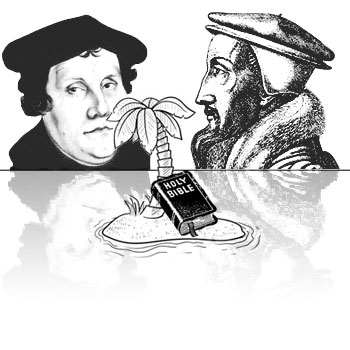
    In my post “The Bible Alone” I offered a definition of sola scriptura as “the belief that the Bible alone is the final and infallible authority in matters of Christian faith and that tradition, reason and emotions, though important, must ultimately be evaluated in light of Scripture.”

    I later deleted the words “and infallible” from that definition because they seemed to add unnecessary confusion. The Reformers didn’t view Biblical inspiration (a belief held by all Christians) as necessitating a belief in the absolute inerrancy and infallibility of Scripture. (more…)

  • The Bible Alone

    The Bible Alone

    The Bible alone

    Mark Driscoll recently tweeted: “The Bible alone gives us the insight we need to understand what’s going on in the world…and what’s going on in us.”

    I realize a single tweet isn’t a full expression of systematic theology, but the idea expressed in that one sentence sums up much of what is wrong with modern American evangelicalism.
    (more…)

  • What We Can Learn From Louis Giglio

    What We Can Learn From Louis Giglio

    Louis Giglio

    Sorry to disappoint, but I’m not going to comment on the details of the Louie Giglio story. If you’re not familiar with them you can catch up here. To me, this particular non-event just isn’t that important — the presidential inaugural benediction is a symbolic gesture that doesn’t have any real significance in the grand scheme of things. 

    But there’s an important reminder in all this: Giglio’s views on homosexuality, despite attempts by some to paint them as extreme, are in fact normative for most conservative Christians — who are, by some counts, nearly half the population of the United States. So though one may vehemently disagree with Giglio on this topic, one can’t legitimately marginalize him as representing merely a fringe position. (more…)

  • Locusts and Honey

    Locusts and Honey

    Dinner!

    One popular understanding of John the Baptist’s time in the wilderness is that, though the text says he ate “locusts and wild honey,” he actually ate locust bean pods, not insects. This has become such a part of Christian mythology that the carob tree, which produces edible bean pods and is native to the Middle East, is also known as St. John’s Bread.

    We find the description of John the Baptist’s diet in Matthew 3.4 and Mark 1.6. Both gospels say that he lived on ἀκρίδες καὶ μέλι ἄγριον — that is, locusts and wild honey. The key word here is ἀκρίς, meaning locusts. Besides these two verses, ἀκρίς also occurs in Revelation 9.3 and Revelation 9.7 where it is used to describe a plague of insects. Locusts are also listed in Leviticus 11.22 as one of the “clean” foods that are permissible to eat. (more…)

  • Intellectual Snobbery

    Intellectual Snobbery

    Yours truly

    I’ve been accused of intellectual snobbery. I suppose there are worse things — like say, being accused of just plain snobbery. Or boring old intellectualism. But intellectual snobbery — that’s a double whammy — a two-for-one insult worth paying attention to!

    Ironically, I wasn’t labeled an intellectual snob for providing a too academic and esoteric argument, but rather for refusing to do so. That’s right — because I declined to offer up scholarly resources and arguments, I fell afoul of the snob police. One only wonders what would have happened if I had decided to bring scholarly resources to bear!
    (more…)

  • Homosexuality: The Issue facing the Church

    Homosexuality: The Issue facing the Church

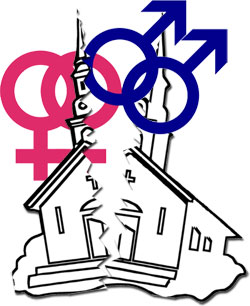
    divided-churchIs there currently a more divisive issue within Christianity than that of homosexuality? Sure there are plenty of other issues that Christians fight about, but of all the topics mentioned in my post “Can you be a Christian and still believe … ?”, homosexuality and abortion easily garnered the most attention. And though abortion is undoubtedly a contentious issue, Christendom stands in virtually unanimous opposition to it — the discussion there is largely regarding the extent to which the practice should be legally regulated or fully prohibited.
    But homosexuality — is this the key issue in what some have labeled a New Reformation? Are we in the middle of a foundational schism? Or will this issue fade into irrelevancy as time passes, just as slavery (at least in the Western world) is now only a sad memory from the past?
    (more…)

  • Who said writing theological limericks can’t be lucrative?

    Who said writing theological limericks can’t be lucrative?

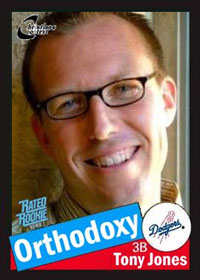
    Apocryphal Tony Jones cardMy thanks to Tony Jones for running his Theologian Trading Card Contest. It turns out that I was a lucky winner thanks to this limerick about Elisabeth Schüssler Fiorenza:

    To Schüssler Fiorenza women are indebted.
    Before her they were largely uncredited.
    She thoughtfully shared
    And with boldness declared
    A feminist theology intrepid!

    Somewhat oddly, my limerick about Schüssler Fiorenza didn’t garner me a card signed by her, but instead I won a signed Kevin J. Vanhoozer card — though I have no real complaints about what was a great contest with great prizes! (Although there was one snide comment from an unnamed significant other who said the quality of my limericks offended her sensibilities as an English Literature major and as a human being. To that sentiment I demur, though I’ll readily agree that it would be unwise to quit my day job in order to pursue a career of theological limerick writing.)

    And, even if you missed this contest, you can still purchase your own set of Theologian Trading Cards.

  • A Modest Proposal for the Return of the Biblical Institution of Slavery

    A Modest Proposal for the Return of the Biblical Institution of Slavery

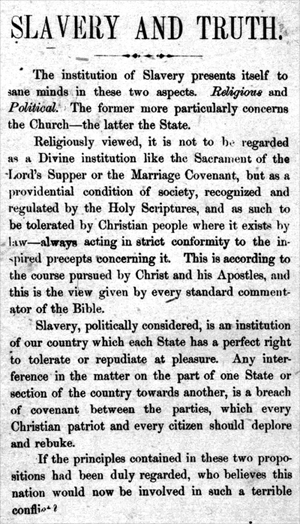
    Slavery and TruthProlegomena
    At the outset we must make clear the standards by which we are to judge the institution of slavery. As Christians, we cannot be subject to whims of the heart or fancies of the intellect. We cannot acquiesce to the norms of modern secular culture, instead we must hold firm to the norma normans, the norming norm, the Bible, the revealed Word of God to mankind.

    We are fallen creatures, living in utter darkness, unable to see the light on our own: “the heart is deceitful above all things and beyond cure” (Jer. 17.9). But God, through his grace, provided us with Holy Scripture, which is “God-breathed and is useful for teaching, rebuking, correcting and training in righteousness” (2 Tim 3.16). It is the inspired, inerrant and infallible Bible that we must cling to as the absolute standard of truth.
    (more…)