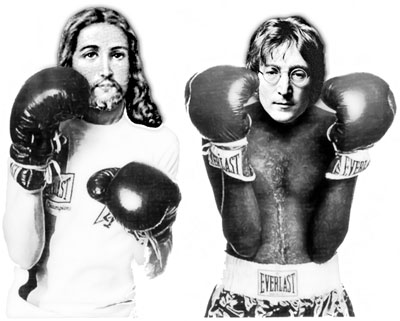
 One criticism that I’ve heard leveled against progressive (liberal!) Christians is that they have an “all you need is love” theology — that they essentially neglect the Gospel, overlook sin and ignore God in favor of vague platitudes that advocate peace and love at the expense of Christian orthodoxy.
If one understands this position as strictly reductive (i.e. you need nothing other than love), then yes, such a statement is indeed problematic. You need food, you need air and theologically speaking, you need justice and wisdom and truth and faith and grace and patience and determination and on and on. Love alone simply can’t function as a robust systematic theology.
Perhaps some Christians have gone astray by elevating “love” to an inappropriate position. But one should be extraordinarily cautious about proffering such a complaint. The Pharisees voiced similar accusations against Jesus when he repeatedly set aside strict observance of the law in favor of a deeper, truer law. His consistent message was that orthopraxy trumps orthodoxy and that the foundation of orthopraxy is love (Mat. 25.31–46).
Jesus summed up the entire Christian life in terms of love: “ ‘Love the Lord your God with all your heart, with all your soul, and with all your mind.’ This is the first and greatest commandment. The second is like it: ‘Love your neighbor as yourself.’ All the law and the prophets depend on these two commandments” (Mat 22.37−40). These commands aren’t simply feel-good platitudes, they are a powerful call to embrace a specific and active love. The realities of life challenge love at every turn, and love alone, as a disembodied feeling adrift on the Platonic ether, cannot save us. But love as a practice, love as a way of life, love as an experience of God, love that encompasses the totality of God’s plan — that love can save us. Love requires participation, it requires maintenance, it requires attention: “Above all, maintain constant love for one another, for love covers a multitude of sins” (1 Pet. 4.8).
Love doesn’t obviate other aspects of a Christian life, love holds those aspects together. Love is not a solitary requirement, it is the thread that unifies and empowers all the other requirements. If we don’t have love, nothing else works. If we don’t show love, we can’t expect to receive it. If we don’t love God, how can we hope to love our neighbor? “But love your enemies, and do good, and lend, expecting nothing back. Then your reward will be great, and you will be sons of the Most High because he is kind to ungrateful and evil people. Be merciful, just as your Father is merciful” (Luke 6.27–36).
Love is the means by which God relates to us and the means by which we accomplish His plan. “All you need is love” may be inaccurate in a strict sense, but to those who accuse some Christians of putting an inordinate amount of emphasis on love, one must remember that it was Jesus himself who set the precedent. Love, properly enacted and expressed, subsumes the distractions of theology and overpowers our personal tendencies to judge and criticize.


Leave a Reply to Richard LubbersCancel reply