Tag: greek

  • Adding to the Bible: Reflections on 1 John 5:7–8

    Adding to the Bible: Reflections on 1 John 5:7–8

    trinity

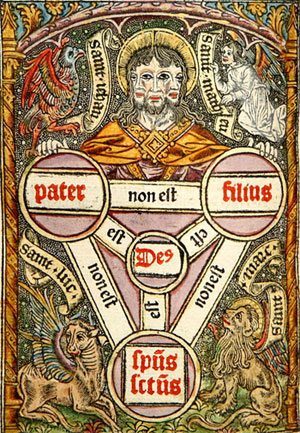
    The King James Version of 1 John 5:7–8 reads:

    For there are three that bear record in heaven, the Father, the Word, and the Holy Ghost: and these three are one. And there are three that bear witness in earth, the Spirit, and the water, and the blood: and these three agree in one. 

    Nowhere else in the Bible do we find such an explicit confirmation of the Trinity: in this brief passage orthodox trinitarianism is laid out in no uncertain terms. Unfortunately, this theological gem isn’t actually part of the original text of the Bible. In the words of renowned New Testament scholar Bruce Metzger: “that these words are spurious and have no right to stand in the New Testament is certain.” (more…)

  • Found or Not Found? An Examination of 2 Peter 3.10

    Found or Not Found? An Examination of 2 Peter 3.10

    earth-fire

    Let’s briefly take a look at one of the knottiest textual problems in the New Testament: 2 Peter 3.10.

    For the purposes of this discussion, we’ll set aside issues of canonicity (hotly-contested) and authorship (not Peter) and simply focus on the text of this single verse.
    (more…)

  • Lexical Lies and Dictionary Deceptions

    Lexical Lies and Dictionary Deceptions

    Red light

    In a recent online discussion regarding the Bible and homosexuality, one participant brought up the fact that Jesus never directly addressed the issue of homosexuality. To my surprise, another participant claimed that Jesus most certainly did condemn homosexuality in Matthew 15.19: “For out of the heart come evil intentions, murder, adultery, fornication, theft, false witness, slander.” (NRSV)

    This person claimed that “fornication,” or πορνεία in Greek, specifically includes homosexuality and cited Thayer’s Greek Lexicon as defining πορνεία as: “adultery, fornication, homosexuality, lesbianism, intercourse with animals etc.”

    (more…)

  • Mark Driscoll doesn’t want you to study the Bible

    Mark Driscoll doesn’t want you to study the Bible

    Mark Driscoll

    Mark Driscoll recently caused another brouhaha with his views about gender roles. The short version of this latest controversy is that he compared nagging wives to water torture. You can watch the offending segment here.

    But are we really surprised by this sort of thing from Driscoll? By now it should seem par for the course: we know where he stands on these issues, we know that he states his positions in less-than-eloquent ways, we know he characterizes the positions of his opponents in less-than-charitable terms and we know that none of this is likely to change. 

    But in the rush to point out yet another misogynistic statement from Driscoll, a perhaps even more troubling statement from him was overlooked. In the opening of his sermon on Ephesians 5.22−33 and the subject of wives submitting to their husbands, Driscoll says:
    (more…)

  • It’s All Greek To Me

    It’s All Greek To Me

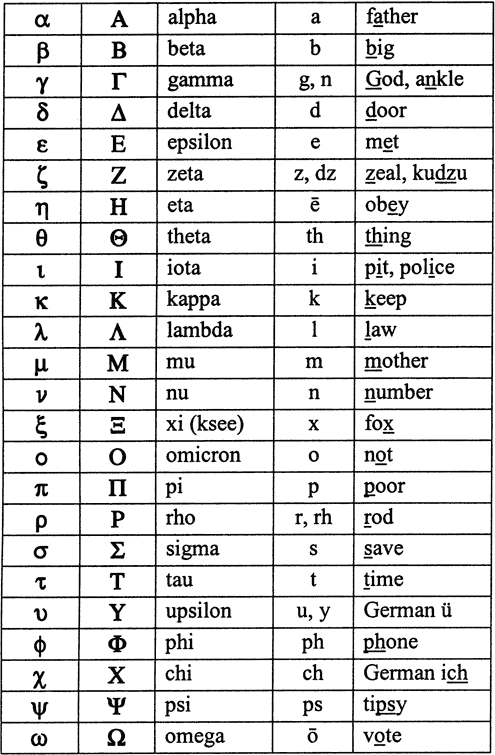
    When I write posts referencing Greek words or when I have discussions about the meanings of words in particular Bible verses, I’m never sure to what extent others are familiar with Koine Greek. Can I write μέτοχος? Should I transliterate it to metochos? Or maybe the answer is that you should learn Greek!

    Every Christian who is serious about studying the Bible (and that should included every Christian) should have at least a basic familiarity with biblical Greek. That means knowing the Greek alphabet, being able to read and pronounce Greek words and having a basic understanding of how the language works. Mastering these rudiments will open up vast resources for furthering your Biblical knowledge. (more…)

  • Baptism in the Holy Spirit

    Baptism in the Holy Spirit

    Perhaps the primary doctrinal difference separating Pentecostals and most Charismatics from the rest of Christendom is the doctrine of Baptism in the Holy Spirit. According to their view, Baptism in the Holy Spirit is a singular milestone in the Christian life that occurs subsequent to salvation and is evidenced by speaking in tongues. The Assemblies of God considers Baptism in the Holy Spirit one of their four Core Doctrines and one of their 16 Fundamental Truths:

    All believers are entitled to and should ardently expect and earnestly seek the promise of the Father, the baptism in the Holy Spirit and fire, according to the command of our Lord Jesus Christ. This was the normal experience of all in the early Christian Church. With it comes the enduement of power for life and service, the bestowment of the gifts and their uses in the work of the ministry.

    (more…)