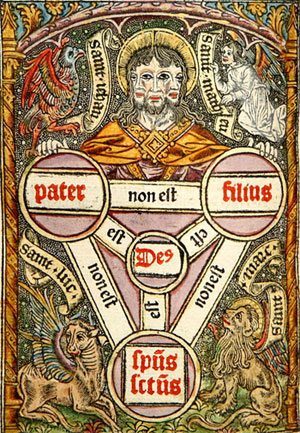

The King James Version of 1 John 5:7–8 reads:
For there are three that bear record in heaven, the Father, the Word, and the Holy Ghost: and these three are one. And there are three that bear witness in earth, the Spirit, and the water, and the blood: and these three agree in one.
Nowhere else in the Bible do we find such an explicit confirmation of the Trinity: in this brief passage orthodox trinitarianism is laid out in no uncertain terms. Unfortunately, this theological gem isn’t actually part of the original text of the Bible. In the words of renowned New Testament scholar Bruce Metzger: “that these words are spurious and have no right to stand in the New Testament is certain.” (more…)



 “For it is impossible in the case of those who have once been enlightened, tasted the heavenly gift, become partakers of the Holy Spirit, tasted the good word of God and the miracles of the coming age, and then have committed apostasy, to renew them again to repentance, since they are crucifying the Son of God for themselves all over again and holding him up to contempt.” (Heb 6:4–6 NET)
 Christians often cite Luke 17.3 as commanding us to condemn sin in the lives of other Christians: “If your brother sins, rebuke him.” This is sometimes followed by a reference to Ephesians 4.15, where we are admonished to “speak the truth in love.” Given these clear teachings, Christians are to eschew timid tolerance in favor of boldly confronting the sin in our fellow Christian’s lives. We are responsible for holding one another accountable for our actions and we are remiss if we let obvious transgressions go unchallenged. Surely if we had some unknown sin in our own life we would want to be told about it — so we have a Christian obligation to do the same when we see sin in others.
 I regularly encounter citations of outdated Biblical reference material: a friend recently sent me an article that referenced definitions from