Tag: evolution

  • Why was the Ham/Nye debate audience so white?

    Why was the Ham/Nye debate audience so white?

    sea-of-white

    Elizabeth Dias, in her Time magazine piece about the Ham/Nye debate, What You Missed While Not Watching the Bill Nye and Ken Ham Creation Debate, made the following observation:

    2 minutes. Nye, in his signature bowtie, and Ham, with his Aussie accent, hop on stage, shake hands, and ready themselves behind their respective Apple laptops (only Nye’s has stickers). Nye stands on the left. Ham is on the right. The cameras pan to an all-white audience.

    (more…)

  • Twittering with Young Earth Creationists

    Twittering with Young Earth Creationists

    hard-heart

    @CoolingTwilight #
    Do you believe in evolution? #thereisabook that will tell you about Jesus. And then you can keep believing in evolution. (more…)

  • Me and Mr. Ham

    Me and Mr. Ham

    wilkinson-v-ham

    I recently caused a bit of a dustup with my Patheos post about Ken Ham: “Creationist Ken Ham versus the Truth.” (more…)

  • Driscoll on Evolution

    Driscoll on Evolution

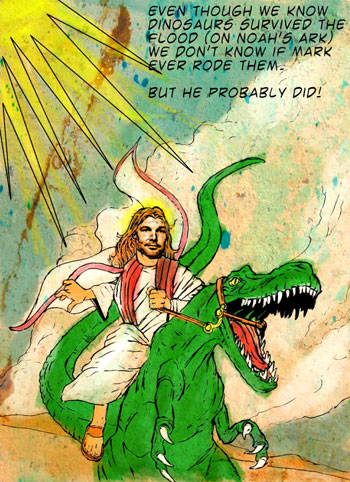
    Dino Driscoll

    In response to my previous post about Mark Driscoll, a commenter on reddit referenced Mark Driscoll’s and Gerry Breshears’ book, Doctrine: What Christians Should Believe. (Hereafter I’ll simply reference Driscoll as the author).

    About that book, another commenter said “In one chapter it plainly stated that the majority of scientists agree that human beings arose about 10,000 years ago.”

    Not one to simply accept an anonymous comment on the internet as truth, I decided to see for myself what Driscoll said about evolution in his book. Among many questionable assertions and conclusions, these quotes seemed particularly problematic:

    (more…)

  • Review: The Revisionaries

    Review: The Revisionaries

    The Revisionaries

    The Revisionaries is a 2012 documentary film about the Texas State Board of Education and its recent battles over science and U.S. history curricula. Director Scott Thurman explores the intersection of politics, religion and science as seen through the school board debates, spending considerable time with school board member, full-time dentist and conservative Christian Don McLeroy. 

    Thurman gives fair time to all sides of the debate and presents a largely impartial account of the issues. Although I wished he would have provided a more in-depth examination of the issues themselves, that wasn’t the focus of the film. This movie isn’t about evolution, it’s about the politics of educating our children. Who decides what makes it into textbooks? And more importantly, what reasons do they have for making those decisions?
    (more…)

  • Review: Evolution’s Purpose by Steve McIntosh

    Review: Evolution’s Purpose by Steve McIntosh

    Evolution's Purpose

    Evolution’s Purpose: An Integral Interpretation of the Scientific Story of Our Origins by Steve McIntosh is a heady brew of science and philosophy. This isn’t a quick-and-easy guide for practical spiritual growth. Rather, it’s a dense and thorough explication of an integrative understanding of evolution. For McIntosh, evolution is not a strictly scientific, materialistic subject; it touches on every aspect of reality: “there is no getting around the metaphysical connotations of evolution as a ubiquitous cosmic process.” And it is this new “philosophy of evolution” that will play a decisive role in both our individual spiritual development as well as the continued development of humanity.
    (more…)

  • Follow-Up: Can you be a Christian and still believe … ?

    Follow-Up: Can you be a Christian and still believe … ?

    Chi RhoMy post Can you be a Christian and still believe … ? caused quite a bit of furor on the interwebs, so I’d like to take a moment to offer a few explanatory notes as well as provide some resources for further exploration of these topics.

    First, the point of the post wasn’t to provide a litmus test for Christian faith (liberal or otherwise). The moment we use any of these issues to judge someone else’s relationship with God, we’ve stepped into dangerous territory — territory that belongs not to us, but to God alone. What you believe about these things doesn’t include you in or exclude you from the Kingdom of God. (more…)

  • Can you be a Christian and still believe … ?

    Can you be a Christian and still believe … ?

    Chi RhoGuess what? You can still be a Christian even if you believe that:
    1. Evolution is true.
    2. The Bible isn’t inerrant.
    3. Women have the same rights as men.
    4. Homosexuality isn’t a sin.
    5. Owning a gun isn’t a God-given right.
    6. America isn’t God’s chosen country.
    7. Republicans aren’t God’s chosen political party.
    8. The modern state of Israel isn’t God’s chosen people.
    9. Decisions about abortion should be left up to individual women.
    10. Non-Christians won’t burn for eternity in hell.

    And you just might be a bit closer to the Kingdom of God if you do believe some of those things.

    Update #1:
    For those of you on Facebook, I’ve created a nice little meme of this post.

    Update #2:
    I’ve provided a list of resources regarding these beliefs in my follow-up post, coincidentally titled: Follow-Up: Can you be a Christian and still believe … ?

  • Review: The Language of God by Francis Collins

    Review: The Language of God by Francis Collins

    Collins presents his personal testimony as well as his understanding of topics concerning science and religion. He argues for a synergy between the two and lays out his views on theistic evolution or “Biologos.” Many of his beliefs may not sit well with conservative evangelicals, but his discussion of modern science as it relates to matters of faith is worth reading. This book is neither rigorously intellectual nor particularly theologically insightful, but it does provide a perspective that merits attention. For more work in a similar vein, see http://www.biologos.org/.
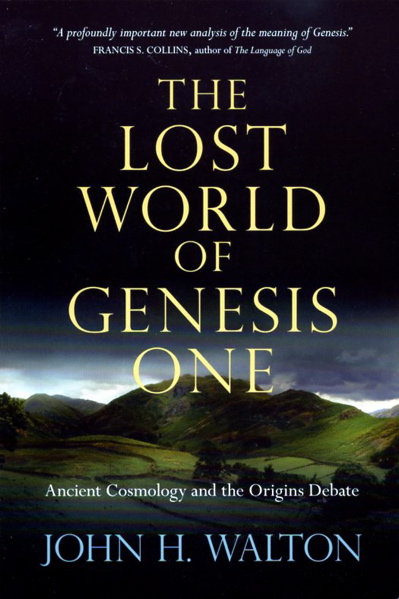
  • Review: The Lost World of Genesis One by John Walton

    Review: The Lost World of Genesis One by John Walton

    Walton, John H. (2009). The Lost World of Genesis One: Ancient Cosmology and the Origins DebateDowners Grove: InterVarsity Press.

    Walton lays out his reading of Genesis 1 in a clear and accessible manner, arguing persuasively that Genesis 1 is a functional, rather than a material, account of creation that describes the inauguration of a cosmic temple. He also discusses how this reading impacts the creation vs. evolution debate, the ongoing conflict of faith vs. science, the intelligent design movement and public science education. Walton is acutely aware of the variety of Christian beliefs on these topics and discusses them with sensitivity. This book stands in stark contrast to the naïve Biblicism of Kurt Wise’s Faith, Form and Time; Walton’s exegesis is the antidote to Young Earth Creationist claims to a “literal” reading of Genesis. The Lost World of Genesis One should be required reading for every Christian.