

While reflecting on the nature of evangelical Christianity, this quote from C.S. Lewis’ The Screwtape Letters came to mind:
My dear Wormwood,
The real trouble about the set your patient is living in is that it is merely Christian. They all have individual interests, of course, but the bond remains mere Christianity. What we want, if men become Christians at all, is to keep them in the state of mind I call ‘Christianity And’. You know–Christianity and the Crisis, Christianity and the New Psychology, Christianity and the New Order, Christianity and Faith Healing, Christianity and Psychical Research, Christianity and Vegetarianism, Christianity and Spelling Reform. If they must be Christians let them at least be Christians with a difference. Substitute for the faith itself some Fashion with a Christian colouring. Work on their horror of the Same Old Thing.
“If they must be Christians let them at least be Christians with a difference” — but of course we do have differences, and often important ones at that! I agree with the sentiment that we should seek unity, that we should cling to “mere” Christianity and that we should hold our differences with humility. But therein lies the rub: what for one Christian is a minor theological difference not worth quibbling over is, for another, a heresy that threatens the very foundations of belief.
What beliefs do unite us? What are the essentials? What defines someone as a Christian? Is it merely a self-designation that has a potentially different meaning for each person? Simply a follower of Jesus? A profession that Jesus is Lord? An affirmation that Christ died for our sins, was buried and was raised on the third day? Agreement with the Apostles’ Creed? With the Nicene Creed?
But moving past those essentials (whatever they may be), how do we negotiate our differences on other matters? How do we hold true to our deeply held beliefs while still respecting — and even welcoming — the diverse beliefs of others? How do we find unity as “mere Christians” when we have so many seemingly unbridgeable theological gaps?
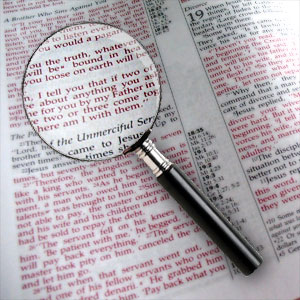
 I recently heard a pastor say that “experience shouldn’t determine our doctrine, only the Bible should.” He went on to explain that we might experience all sorts of things that lead us to believe one thing or another, but that the only true, infallible source of doctrine is the Bible and whenever our experience causes us to question Biblical doctrine, we must always defer to Biblical teaching, since it is the Word of God.
 I’ve recently encountered several instances of Christians I know calling certain beliefs “heresy.” In one case, a pastor labeled the belief that Christians could be possessed by demons as a heresy. In another, an acquaintance called the entire Emerging Church movement heresy. But what’s the real meaning of such a divisive term? Why not just say “I think you’re wrong?”
 There is perhaps no designation within Christianity that is so ubiquitous but yet so difficult to define as that of Evangelical. It is simultaneously bandied about as a term of derision, as a badge of honor, as a litmus test for orthodoxy and as a synonym for fanaticism.